Supporting the Parent Behind the Ill Child
October is National Depression Education and Awareness Month
October is National Depression Education and Awareness Month, an opportunity to increase awareness of depression, reduce stigma, and encourage individuals experiencing emotional distress to seek appropriate support.
For parents caring for a child with a life-threatening illness, the emotional and psychosocial demands can be profound. A child’s diagnosis can disrupt family routines, employment, finances, relationships, and a parent’s sense of stability. Parents may also be required to navigate complex medical care while coping with ongoing uncertainty related to treatment and prognosis. These cumulative stressors can contribute to depression, anxiety, caregiver burden, anticipatory grief, and social isolation.
At Friends of Karen, social workers recognize that addressing the psychosocial needs of parents is an essential component of supporting the well-being of the entire family. Through ongoing, individualized support, social workers provide parents with a safe and supportive space to process emotional distress, identify coping strategies, navigate family and social challenges, and access appropriate resources. This comprehensive approach acknowledges that supporting parents’ emotional and psychosocial well-being is integral to strengthening the family’s capacity to cope with the challenges of a child’s serious illness.

Clinical Assessment and Emotional Support
Friends of Karen social workers assess the emotional, social, and environmental factors affecting a family’s ability to cope with a child’s serious illness. Through ongoing communication and a strong therapeutic relationship, social workers identify changes in emotional functioning, caregiver stress, coping capacity, family dynamics, and psychosocial needs.
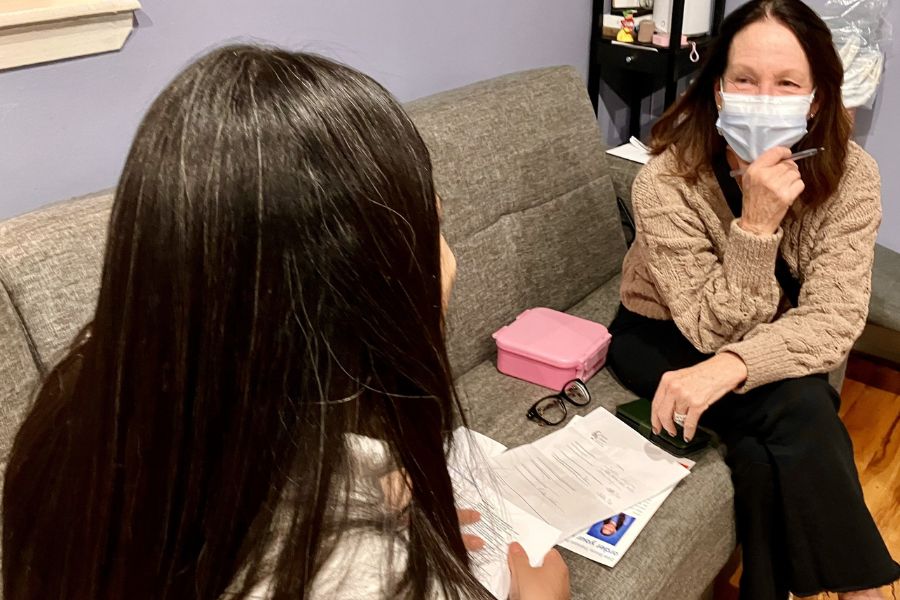
When a parent share having symptoms of depression or significant emotional distress, the social worker provides a supportive and nonjudgmental environment in which the parent can discuss their experience openly. Through supportive counseling and therapeutic communication, social workers help parents process difficult emotions, identify existing strengths and coping mechanisms, and develop strategies for managing the psychological demands associated with their child’s illness.
The social worker’s consistent presence can be particularly important for parents who feel overwhelmed, isolated, or unable to prioritize their own emotional needs while caring for their child.
Strengthening Coping and Risilience
Social workers help parents identify and strengthen adaptive coping strategies while recognizing the extraordinary circumstances they are experiencing. Interventions may include emotional validation, active listening, problem-solving, normalization of stress responses, strengths-based interventions, and assistance with identifying supportive resources. Rather than focusing solely on the immediate crisis, social workers work collaboratively with parents to support their ongoing adjustment to the child’s illness and the changes it may create within the family.
Supporting the Parent Supports the Child
A parent’s emotional well-being is closely connected to the functioning of the family system.
When parents receive appropriate psychosocial support, they may be better positioned to remain emotionally available to their children, participate in medical decision-making, maintain family relationships, and navigate the demands of caregiving.
Friends of Karen therefore recognize that supporting a child with a life-threatening illness requires supporting the people who care for that child.
Friends of Karen social workers provide more than assistance with practical needs. They provide a consistent professional presence—assessing psychosocial needs, strengthening coping, supporting emotional regulation, facilitating access to additional services, and helping families navigate the profound emotional impact of childhood illness.
For parents experiencing depression, grief, anxiety, or overwhelming caregiver stress, knowing that someone is there to listen, assess, support, and help connect them to appropriate care can be an essential part of the family’s journey.
Bibliography
- Kazak, A. E., Abrams, A. N., Banks, J., et al. (2015). Psychosocial Assessment as a Standard of Care in Pediatric Cancer. Pediatric Blood & Cancer, 62(S5), S426–S459. https://doi.org/10.1002/pbc.25730
- Supports systematic psychosocial assessment of children with cancer and their families as a standard of care.
- Kearney, J. A., Salley, C. G., & Muriel, A. C. (2015). Standards of Psychosocial Care for Parents of Children With Cancer. Pediatric Blood & Cancer, 62(S5), S632–S683. https://doi.org/10.1002/pbc.25761
- Particularly relevant to your article because it addresses parental distress, depression, mental health assessment, and the need for ongoing psychosocial intervention and support.
- Wiener, L., Kazak, A. E., Noll, R. B., Patenaude, A. F., & Kupst, M. J. (2015). Standards for the Psychosocial Care of Children With Cancer and Their Families: An Introduction to the Special Issue. Pediatric Blood & Cancer, 62(S5), S419–S424. https://doi.org/10.1002/pbc.25675
- Establishes the broader evidence-based framework for psychosocial care of children with cancer and their families.
- Jones, B., Currin-McCulloch, J., Pelletier, W., Sardi-Brown, V., Brown, P., & Wiener, L. (2018). Psychosocial Standards of Care for Children With Cancer and Their
Families: A National Survey of Pediatric Oncology Social Workers. Social Work in Health Care, 57(4), 221–249. https://doi.org/10.1080/00981389.2018.1441212- Especially useful for demonstrating the role of social workers in providing psychosocial support throughout the cancer trajectory.
- Kazak, A. E., et al. (2015). Psychosocial Interventions and Therapeutic Support as a Standard of Care in Pediatric Oncology. Pediatric Blood & Cancer, 62(S5).
- Supports the use of psychosocial interventions and therapeutic support to address psychological distress among children with cancer and their parents.
- McTate, E., et al. (2021). Implementation of the Psychosocial Standards for Caregiver Mental Health Within a Pediatric Hematology/Oncology Program. Journal of Clinical Psychology in Medical Settings. https://doi.org/10.1007/s10880-020-09719-3
- Provides additional support for assessing caregiver mental health and facilitating appropriate interventions within pediatric oncology settings.